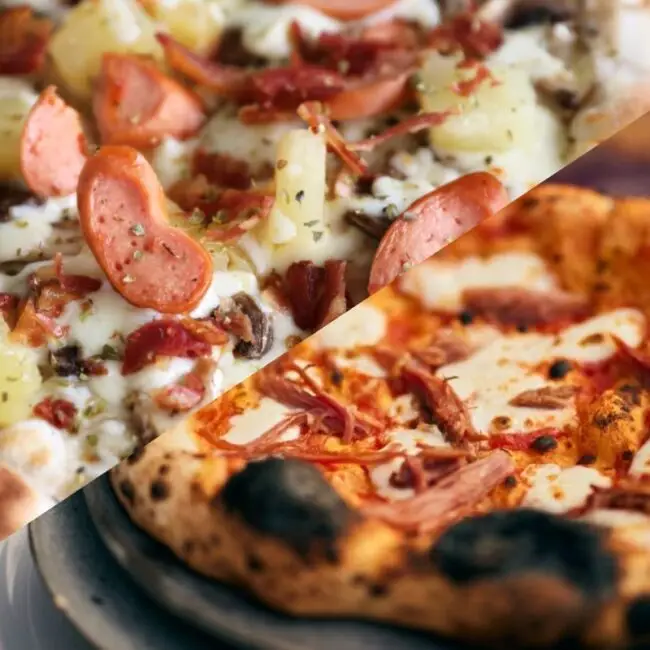
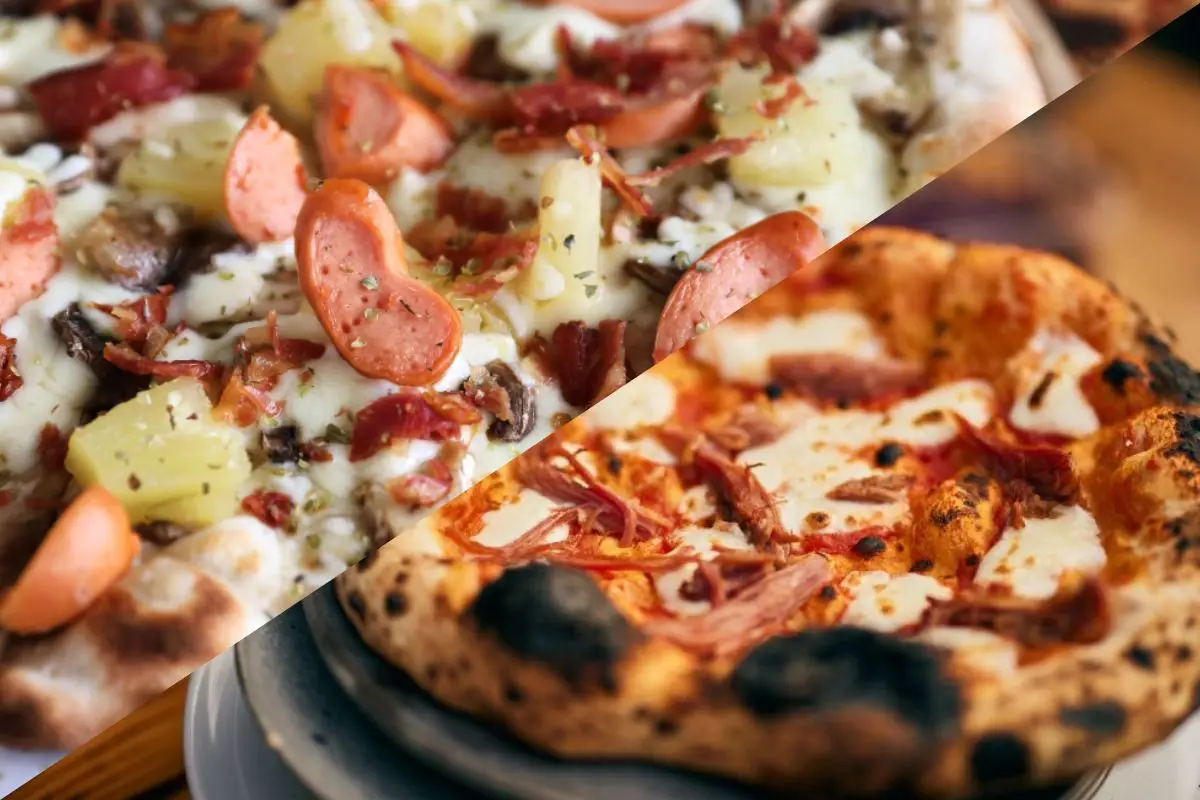
Ask for “a pizza” in Australia and you could get two quite different things. One is the Neapolitan pie: soft, blistered, eaten with a knife and fork, and made under rules that the European Union protects by law. The other is the Aussie-style pizza most of us grew up with: a sturdier base, generous toppings, and a box that survives the drive home.
Neither is the “real” pizza. They are built for different jobs, and knowing the difference helps you order the right one for the night you’re having.
There is also a naming trap. On many Australian menus, a Napoletana is a topping combination (tomato, anchovies, olives, garlic and herbs) on an ordinary Aussie base. It is not the same thing as a Neapolitan-style pizza. More on that below.
Aussie-Style vs Neapolitan Pizza
The Neapolitan column follows the EU’s Pizza Napoletana TSG specification and the AVPN international regulations. Aussie-style pizza has no rulebook, so that column describes the typical suburban pizzeria.

What Is Neapolitan Pizza?
Neapolitan pizza, also known as pizza Napoletana, originates from Naples, Italy. It is recognised for its simple ingredients, distinctive dough and traditional cooking method.
A traditional Neapolitan pizza typically uses flour, water, salt and yeast to create a dough that is fermented before being shaped by hand. The centre is usually thin, while the outer crust, known as the cornicione, rises during cooking to create a soft, airy edge with characteristic spotting from the intense heat.
Traditional toppings are relatively restrained. A classic Margherita combines tomato, mozzarella, basil and olive oil, while Marinara uses tomato, garlic, oregano and olive oil without cheese.
Neapolitan pizza is generally cooked in a very hot oven for a short time, often around 60–90 seconds in a traditional wood-fired oven. The result is a pizza with a tender centre, a puffy edge and a balance of flavour that allows the dough and ingredients to stand out.
What Is Aussie-Style Pizza?
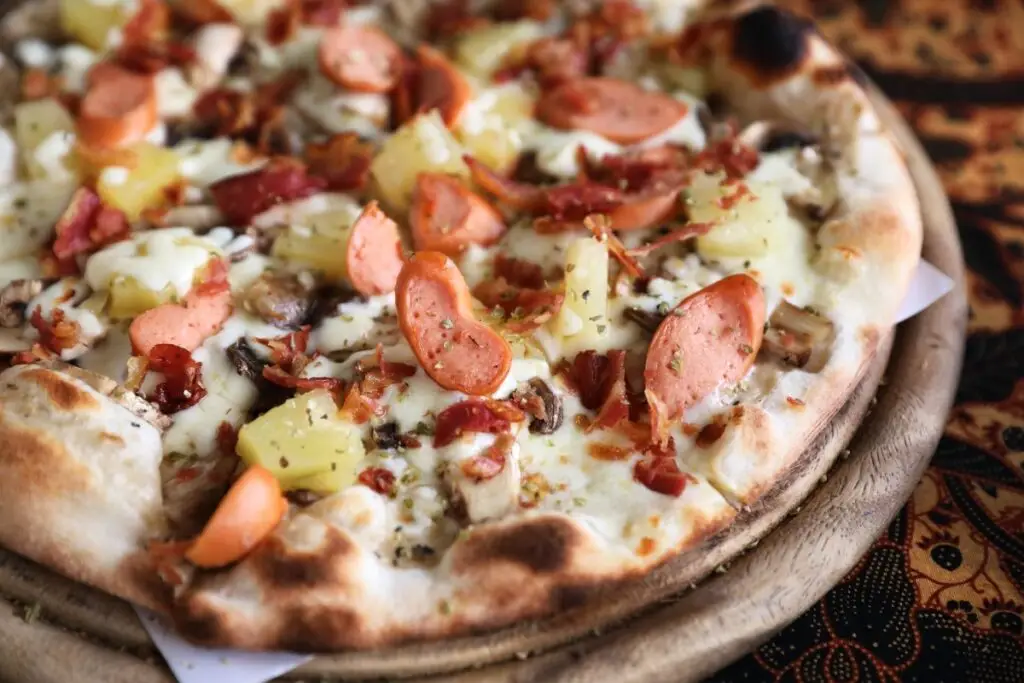
Australian-style pizza has developed around local tastes, takeaway culture and the preference for customisable, generously topped meals. While there isn’t one strict recipe defining what is Aussie-style pizza, it commonly features a relatively sturdy base, plenty of cheese and a wide selection of toppings.
Australian pizza shops often offer combinations designed to be satisfying and familiar, from ham and pineapple to bacon, chicken, prawns, barbecue sauce and several different vegetables on the same pizza.
Aussie-style pizzas are generally built to handle their toppings. Depending on the shop, the base may be thinner and crispier or thicker and softer, but it usually provides enough structure for a substantial amount of ingredients.
The appeal is flexibility. You can choose a classic combination, experiment with different flavours or order a pizza loaded with toppings to share.
Side by side
| Neapolitan | Aussie-style | |
| Rules | Protected by EU law as a Traditional Speciality Guaranteed since 2010; AVPN certifies pizzerias | None; each shop does it its own way |
| Dough | Flour, water, salt and yeast only | Often adds oil or sugar for a softer, browner base |
| Shaping | By hand, no rolling pin, centre about 0.4 cm thick | Rolled or pressed to an even thickness |
| Size | No more than 35 cm across | Small, large and family sizes, often bigger than 35 cm |
| Oven | Wood-fired, about 485 °C | Gas or electric deck or conveyor oven, much cooler |
| Bake time | 60–90 seconds | Several minutes |
| Crust | Puffy, charred rim (cornicione), soft wet centre | Even, crisper edge and firm centre |
| Toppings | Few: the Margherita and Marinara are the benchmarks | Loaded: ham, pineapple, bacon, egg, BBQ sauce |
| Eat it | Straight away, with a knife and fork or folded | Hot, cold or reheated, by the slice |
Why the difference matters at home
A Neapolitan base is built to be eaten within minutes of leaving the oven. Its soft centre is a feature in the restaurant but turns soggy in a box over a 20-minute drive.
An Aussie-style base is built for the box. The longer, cooler bake drives out more moisture, so the base holds up under heavy toppings and is still good when it reaches the table.
The “Napoletana” mix-up
On Australian menus, Napoletana usually names the toppings, not the method. A suburban shop’s Napoletana is typically tomato, anchovies, olives and herbs on its normal base, baked in its normal oven. If you want the Neapolitan style, look for words like “wood-fired”, “Neapolitan-style” or AVPN certification instead.
Which one should you order?
Go Neapolitan when you’re eating at the restaurant, it’s a table of two to four, and you want simple, high-quality toppings to be the point. Order one each, because a Neapolitan pizza is sized as a single serve.
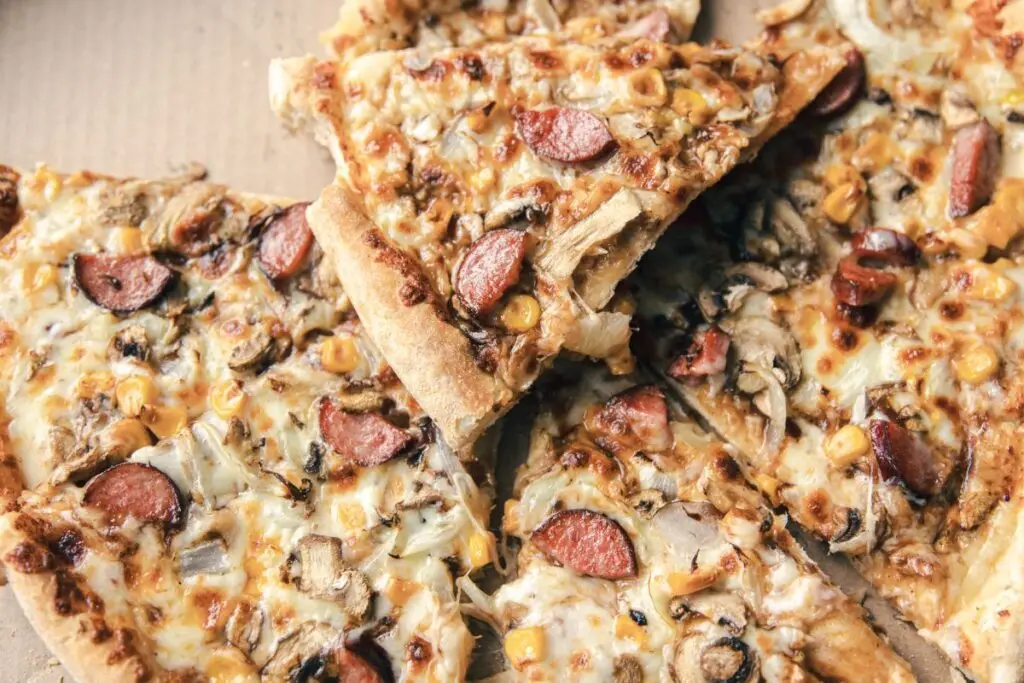
Go Aussie-style when the pizza is travelling, the group is big, or the toppings list is long. It’s the right call for delivery, a family night in, a game-day crowd or a kids’ party, where pizzas sit in boxes and get eaten over an hour.
A few practical things to look for on an Aussie-style menu:
- Family size usually feeds more people per dollar than several larges.
- Half-and-half pizzas settle arguments without a second order.
- Build-your-own lets fussy eaters skip what they don’t like.
- Gluten-free bases are common, but ask how the shop keeps them apart from regular dough if you have coeliac disease.
A long-running suburban shop shows what this style does well. Pizza Riviera in Perth, a Rivervale pizzeria that has made Aussie-style pizza for over 30 years, runs a menu of traditional pizzas in small, large and family sizes, a gluten-free large, half-and-half options and a make-your-own with eight toppings, for takeaway or delivery around Perth’s inner east. Its own Napoletana is a good example of the naming point above: anchovies, fresh tomato, garlic, herbs and cheese on its regular base.
Can you get both at home?
Not easily. A domestic oven tops out well below a wood-fired pizza oven, so a home “Neapolitan” comes out closer to Aussie-style. A pizza stone or steel heated for 45 minutes at the oven’s top setting gets you nearer. For a true Neapolitan at home you need a dedicated pizza oven that reaches 400 °C or more.
FAQ
Is Neapolitan pizza supposed to be soggy in the middle?
Soft and moist, yes. The AVPN rules describe the centre as soft and the whole pizza as easy to fold. A pool of liquid is a fault, not a feature.
Why are Neapolitan pizzas so small?
The EU specification caps the diameter at 35 cm. Larger pizzas cook unevenly in a 60–90 second bake.
What makes a pizza “Aussie”?
On a menu, an “Aussie” pizza usually means bacon, often with egg. As a style, it means the sturdier, more heavily topped pizza made in most Australian suburbs.
Which reheats better?
Aussie-style, comfortably. Reheat slices in a dry frying pan with a lid for a few minutes to crisp the base without drying the toppings.